
Aquatic weed removal is the physical extraction of invasive and overgrown aquatic plants from lakes, ponds, canals, and shorelines so the water stays clear, accessible, and usable. Project 7 Services performs this work across Orlando and Central Florida using mechanical harvesting and hand removal — never chemical sprays — so the plant material is taken out of the water instead of sinking back in. If your lakefront, pond, or shoreline is choked with hydrilla, hyacinth, duckweed, eelgrass, lily pads, or mixed floating mats, request a free estimate and we will review your specific water body and access before confirming scope.
What Aquatic Weed Removal Includes
- Hydrilla and water hyacinth harvesting from open water
- Eelgrass and lily pad clearing along shorelines and swim areas
- Duckweed, filamentous algae, and floating mat skimming
- Submerged weed raking and root-level removal where reachable
- Shoreline and dock-area access clearing
- Canal and channel vegetation clearing
- Haul-away and disposal of harvested plant material
- Post-removal maintenance planning and regrowth guidance
The Problem Aquatic Weed Removal Addresses
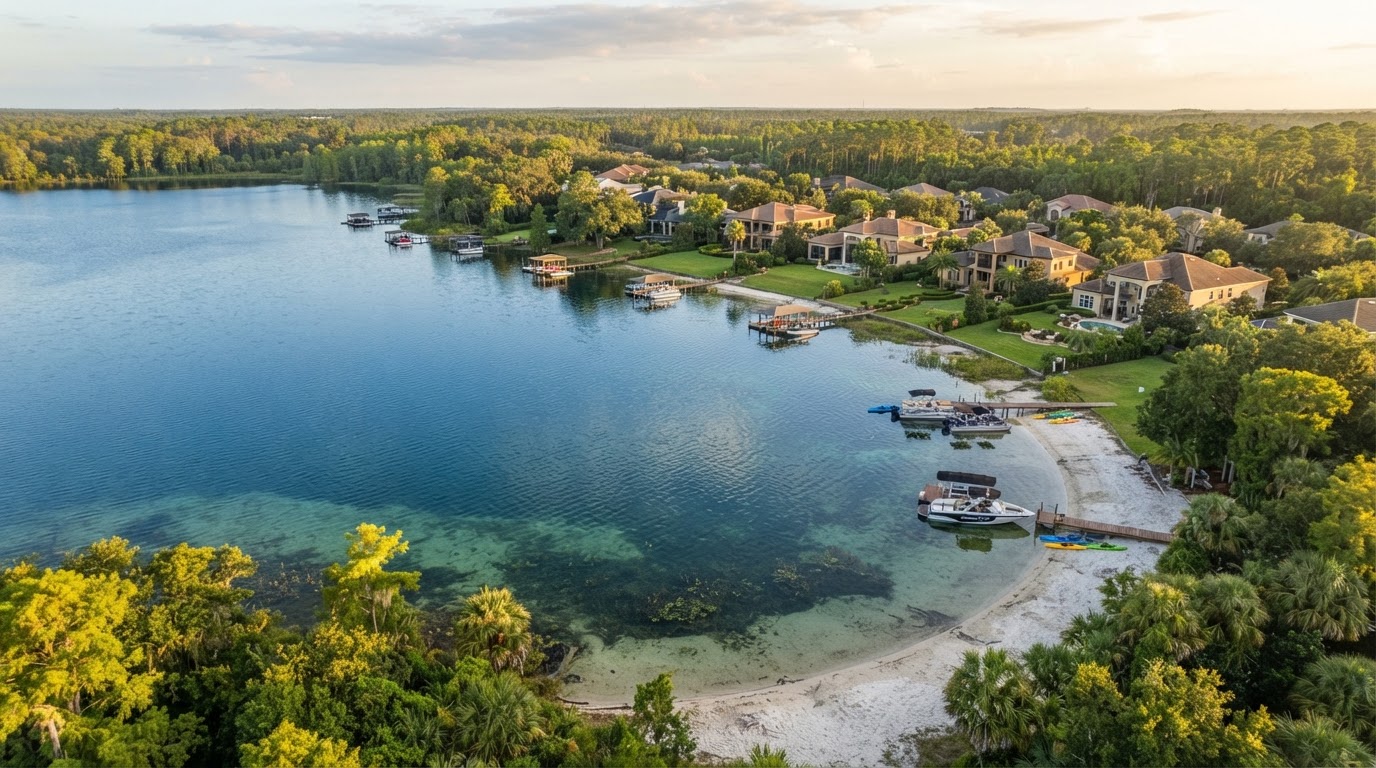
Central Florida's warm climate, long growing season, and nutrient-rich runoff create near-perfect conditions for explosive aquatic plant growth. Left alone, submerged species like hydrilla can grow several inches a day, rising from the bottom to form dense mats just below the surface. Floating species such as water hyacinth and water lettuce double their coverage quickly, drifting across channels and piling up against docks, seawalls, and outflow structures.
As these mats thicken, they block sunlight from reaching the lower water column, trap sediment, and restrict water movement. The practical result is a waterfront that is hard to swim in, difficult to launch a boat or jet ski through, and visually overgrown from the patio or dock. For HOAs and commercial properties, the same growth clogs intake screens, restricts stormwater flow, and makes shared ponds look neglected.
The problem is not just cosmetic. Dense submerged weeds tangle around boat propellers and jet ski intakes, sometimes stalling engines or forcing owners to cut through mats by hand before they can launch. Floating hyacinth mats drift into dock slips and trap debris against pilings, accelerating wear on the structures underneath. In canals and narrow channels, a single heavy bloom can cut off access to open water for every property on that waterway until it is cleared.
Because the problem compounds month over month, waiting tends to make cleanup more involved. Each generation of growth adds biomass to the system — and when that biomass dies back in cooler months or after a treatment, it sinks and decomposes, releasing nutrients that fuel the next, often larger, bloom. The sooner overgrowth is physically removed, the less organic material is left to decompose and recycle as fertilizer for the next growth cycle.
Property owners sometimes assume the only options are chemical herbicides or living with the weeds. Chemical treatments kill the plants but leave them in the water to decompose, which can trigger oxygen drops and algae blooms and often leads to faster regrowth from the remaining root systems. Physical removal takes the plant material — and the nutrients stored in it — out of the water body entirely, which is why it tends to produce cleaner, longer-lasting results without introducing anything foreign to your water.
Who This Service Is For
Lakefront homeowners
Property owners who want clear swimming, boating, and dock access without chemicals in their water.
HOAs & community associations
Neighborhoods managing shared lakes and ponds that need reliable, repeatable vegetation control.
Property managers & commercial sites
Operations teams keeping waterfront amenities clean, accessible, and presentable for residents and guests.
Municipalities & public waterways
Local partners supporting cleaner public access points and managed water bodies.
Canal-front property owners
Owners on narrow waterways where a single bloom can block access for the whole canal.
Our Approach & Methods
Mechanical harvesting
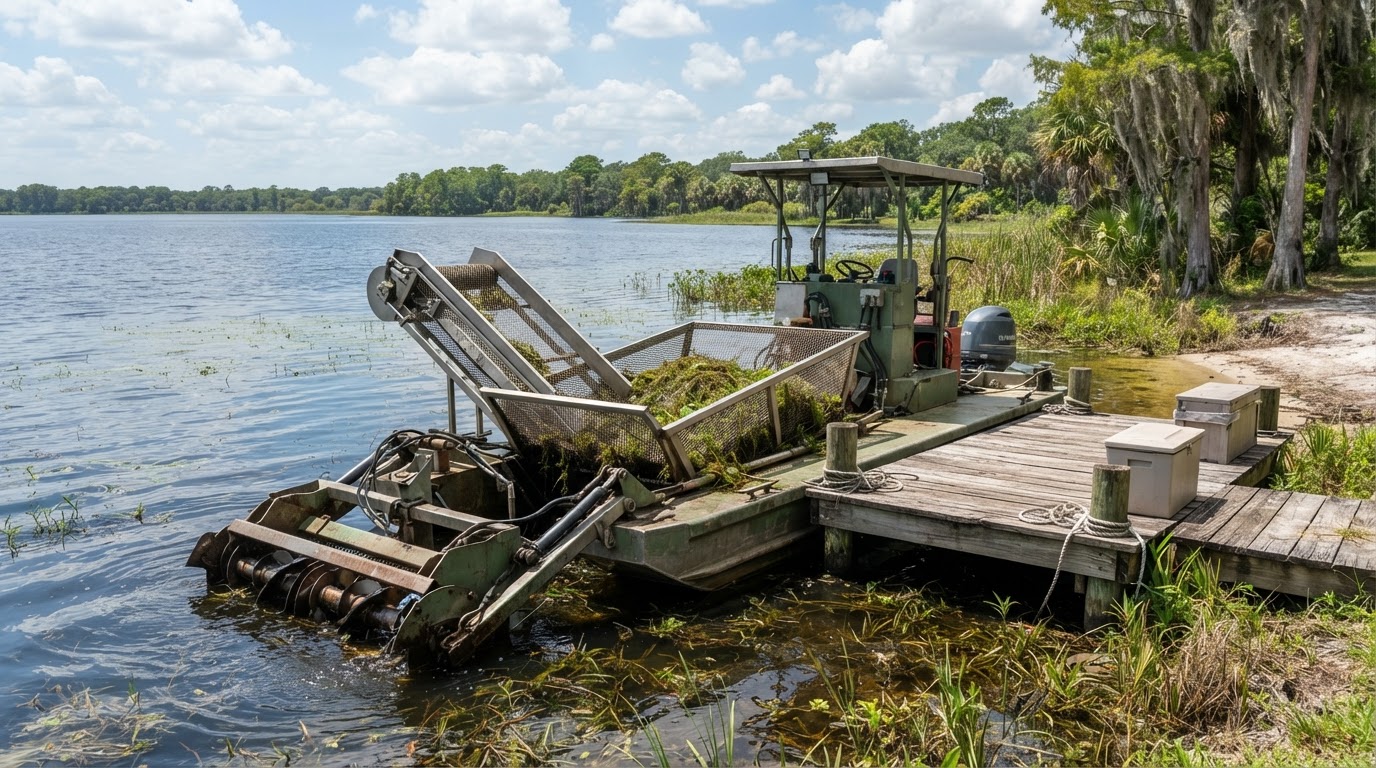
Specialized aquatic harvesters and cutters remove submerged and floating vegetation at and below the waterline, pulling the plant material — not just the top growth — out of the water for disposal. Harvesting is effective against hydrilla, hyacinth, and dense submerged beds that hand tools cannot reach efficiently in deeper water.
Hand removal & raking
For shoreline areas, docks, shallows, and tight spots equipment cannot reach cleanly, we use manual raking and hand pulling to clear roots, stems, and tangled mats. Hand work is what makes dock slips, swim areas, and narrow bank edges usable again.
Skimming & haul-away
Floating mats, duckweed, and loose debris are skimmed and loaded for disposal so the organic material leaves your water body rather than sinking back to the bottom. This is the step that keeps removed nutrients from recycling into the next bloom.
Canal & channel clearing
In restricted waterways, we clear vegetation that blocks passage so boats and jet skis can reach open water again without cutting through mats by hand.
No chemical spray
We do not apply aquatic herbicides. Our focus is physical removal, which avoids the dead-plant decomposition that fuels the next round of growth and keeps the water safe for swimming, pets, fish, and irrigation intakes immediately after work.
Benefits, Limitations & Environmental Considerations
Physical removal delivers an immediate, visible change: the water opens up, access returns, and the harvested plants are gone from the system instead of decomposing on the bottom. It is safe to swim, fish, and let pets near the water afterward because no chemical residues are introduced, and there is no waiting period before the water is usable again. Because we remove the biomass rather than killing it in place, each cleanup takes stored nutrients out of the water body, which tends to slow the next bloom compared to a chemical treatment that leaves the dead material behind. The honest limitation is that aquatic plants grow back — Central Florida's warm, nutrient-rich conditions favor regrowth, and submerged roots and seed banks can remain in the sediment. Removal is ongoing management, not a permanent eradication for every species, which is why we pair clearing with a maintenance plan and, where appropriate, a LakeMat weed barrier for the most troublesome zones. We will not promise that one visit solves the problem permanently, because in this climate it rarely does — but a well-timed routine keeps the water open and usable year-round with far less drama than letting it go and rehabilitating it.
Our Project Process
From project review to a completed waterfront — clear steps, no instant-price promises, scope confirmed before any work begins.
Project review
Share your location, the water body, and a few photos if you can. We review the type and density of vegetation, water depth, and how the area is accessed — by bank, dock, or water.
Tailored plan
We recommend the right combination of mechanical harvesting and hand removal for your shoreline, pond, or lakefront, and confirm scope and access before any work starts.
Non-toxic removal
We physically extract the weeds and floating mats and haul the material away — no chemical sprays, no treated vegetation left to sink and decompose.
Clear results & guidance
You get a cleaner, more accessible waterfront plus practical guidance on maintenance, regrowth timing, and optional LakeMat placement for persistent zones.
Preparation, Access & What to Expect
Before we arrive, clear boats, jet skis, hoses, or loose dock gear from the immediate work area so equipment and crew can reach the shoreline or waterline safely. If the property is gated or behind an HOA access point, let us know the entry details and any community rules we should follow. You do not need to drain, treat, or chemically prep the water in any way — our process is physical, so nothing has to be added to the pond or lake beforehand.
For on-water work, note whether the area has submerged structures, shallow rocks, or irrigation intakes we should avoid. The more we know about access — slope, soft bottom, dock height, culverts — the more accurately we can scope the visit and bring the right equipment. If the water body is shared with neighbors or an HOA, a heads-up to the association can help, since equipment may be visible from other properties during the visit.
If you have tried chemical treatments before, tell us what was used and when. That context helps us understand the growth cycle we are working with and set realistic expectations for how the water will respond after physical removal. It also helps us avoid working in conditions where a recent treatment has left dying material we would be hauling anyway.
What to Expect
- On the day of the visit, expect a crew with harvesting equipment and hand tools staged at your access point — we do not show up with chemical sprays or herbicides.
- For on-water harvesting, expect the equipment to work along your shoreline or into your dock slip; we pull plant material out of the water rather than cutting it loose to drift and resettle.
- Expect visible results the same visit: the water opens up, the surface clears, and the harvested material is loaded for haul-away rather than left to sink and decompose on the bottom.
- Expect some regrowth over the following weeks — this is normal in Central Florida's warm, nutrient-rich water and is not a sign the work failed; it is exactly why we pair removal with a maintenance plan.
- Expect the water to be safe for swimming, pets, and fish immediately after we finish, with no waiting period because no chemicals were introduced.
- Expect us to haul the harvested material off-site so the nutrients stored in it leave your water body entirely rather than recycling back as fertilizer for the next bloom.
- Expect a follow-up recommendation for a seasonal schedule and, where it genuinely fits your situation, a LakeMat for a persistent zone such as a dock slip or swim area.
Maintenance & Regrowth Considerations
Expect regrowth. Warm water and abundant nutrients mean removed plants will try to return, especially the fast-growing submerged and floating species. The advantage of physical removal is that each cleanup takes the existing biomass out of the system instead of leaving it to decay and feed the next bloom, so regrowth is slower and more manageable than after a chemical treatment. Over several cycles of consistent removal, many property owners find the water stays clearer longer between visits because the nutrient load in the system gradually drops.
A seasonal or as-needed maintenance schedule keeps the water open between cleanups. For most Central Florida lakefronts, that means a visit at the start of the heavy growing season and follow-ups as growth returns, with extra attention after storms that push floating material around. We tailor the cadence to your water body rather than pushing a fixed schedule that does not fit.
For persistent zones — a dock slip, a swim area, a narrow channel — a LakeMat or MuckMat placed after clearing can suppress regrowth by blocking light at the bottom without chemicals. The mat sits on the sediment and prevents rooted plants from re-establishing in that specific footprint. We are happy to assess whether a mat fits your situation; it is a targeted option for high-use spots, not a requirement for the whole shoreline.
Cost Factors
We do not quote a fixed price without reviewing the site. Estimates depend on the size of the water body, the type and density of vegetation, water depth, equipment and shoreline access, and the volume of material to haul away. A small residential pond with surface duckweed is a very different scope from a large lakefront with dense submerged hydrilla and a long shoreline to clear. Photos and an on-site review let us give you a transparent, scope-based estimate — never a guess. Reach out for a free estimate tailored to your property, and we will walk through what is driving the scope so you understand the number.
Confirmed Coverage
We provide aquatic weed removal across Orange, Seminole, and Osceola counties and the surrounding Central Florida communities. If you are unsure whether your location is in our service area, call or send your address through the contact form and we will confirm. We focus on the water bodies we can reach and service well, rather than overpromising coverage we cannot back up.
Why Choose Project 7 Services
- Chemical-free physical harvesting — no sprays in your water
- Focused on lakefront, pond, and shoreline work, not general landscaping
- Built for Central Florida waterways, vegetation, and seasonal growth
- Clear before-and-after results you can see from the dock
- Haul-away means removed nutrients leave the system, not just the visible plants
- Maintenance plans tailored to your water body, not a one-size-fits-all cadence
Signs You May Need Aquatic Weed Removal
- You see dense green mats floating on the surface or drifting into your dock slip
- Submerged weeds rise to just below the surface and tangle around boat propellers
- You have to cut or push through weeds by hand before you can launch a boat or jet ski
- The water near your shore looks thick, weedy, or discolored compared to open water
- Floating hyacinth or lettuce is doubling its coverage week over week
- Duckweed forms a continuous green film across the surface that closes back up within days of skimming
- Eelgrass or lily pads have spread across your swim area and make wading unpleasant
- An HOA or community pond is drawing complaints about its weedy, neglected appearance
- A canal or channel you use has become narrow or impassable due to vegetation
- You have tried chemical treatment before and the weeds came back faster than expected
Understanding the Differences
Physical removal vs. chemical herbicide
Chemical herbicides kill aquatic plants but leave the dead material in the water to decompose, which drops oxygen, releases nutrients, and often triggers faster regrowth from surviving roots. Physical removal extracts the plant and its stored nutrients from the water body entirely, so there is no decomposing mass on the bottom and no chemical residue — but it is ongoing management rather than a one-time kill.
Aquatic weed removal vs. lake cleaning
Aquatic weed removal targets the plants themselves — submerged, floating, and shoreline vegetation. Lake cleaning is broader, covering debris, muck, and the general condition of the maintained waterfront. The two overlap heavily and are often done together, but weed removal is the right call when overgrown vegetation is the primary problem.
Aquatic weed removal vs. lakeshore clearing
Aquatic weed removal focuses on plants in and on the water. Lakeshore clearing focuses on the bank itself — brush, grass, branches, and stumps above the waterline. If your problem is in the water, it is weed removal; if your problem is on the bank blocking your path and view, it is lakeshore clearing. Many lakefronts need both.
One-time removal vs. maintenance plan
A single removal opens the water immediately, but in Central Florida's climate regrowth is expected. A maintenance plan catches regrowth before it re-establishes and, because each visit removes biomass and nutrients from the system, tends to keep the water clearer longer over time. For most properties, a plan is more practical than reacting to each bloom.
Ask About LakeMat®
After cleaning, LakeMat weed-control mats can help keep targeted shoreline, dock, and swimming areas clearer without chemicals.
Aquatic Weed Removal FAQs
Request a Free Estimate
Get a transparent quote for aquatic weed removal at your property.
Call (407) 865-1219Get a Free Estimate