
Retention pond cleaning is the vegetation and debris management of stormwater basins so they hold and drain water as designed. Project 7 Services clears overgrown cattails, hydrilla, duckweed, and bank brush from retention ponds serving HOAs, commercial properties, and communities across Orlando and Central Florida — without chemical sprays. Request a free estimate and we will review the basin's conditions, structures, and access before confirming scope.
What Retention Pond Cleaning Includes
- Stormwater basin vegetation clearing
- Inlet, culvert, and outflow debris removal
- Mass aquatic vegetation harvesting
- Bank and perimeter brush control
- HOA and municipal maintenance contracts
- Haul-away and disposal of cleared material
- Post-storm basin clearing
- Condition reporting for property managers
The Problem Retention Pond Cleaning Addresses
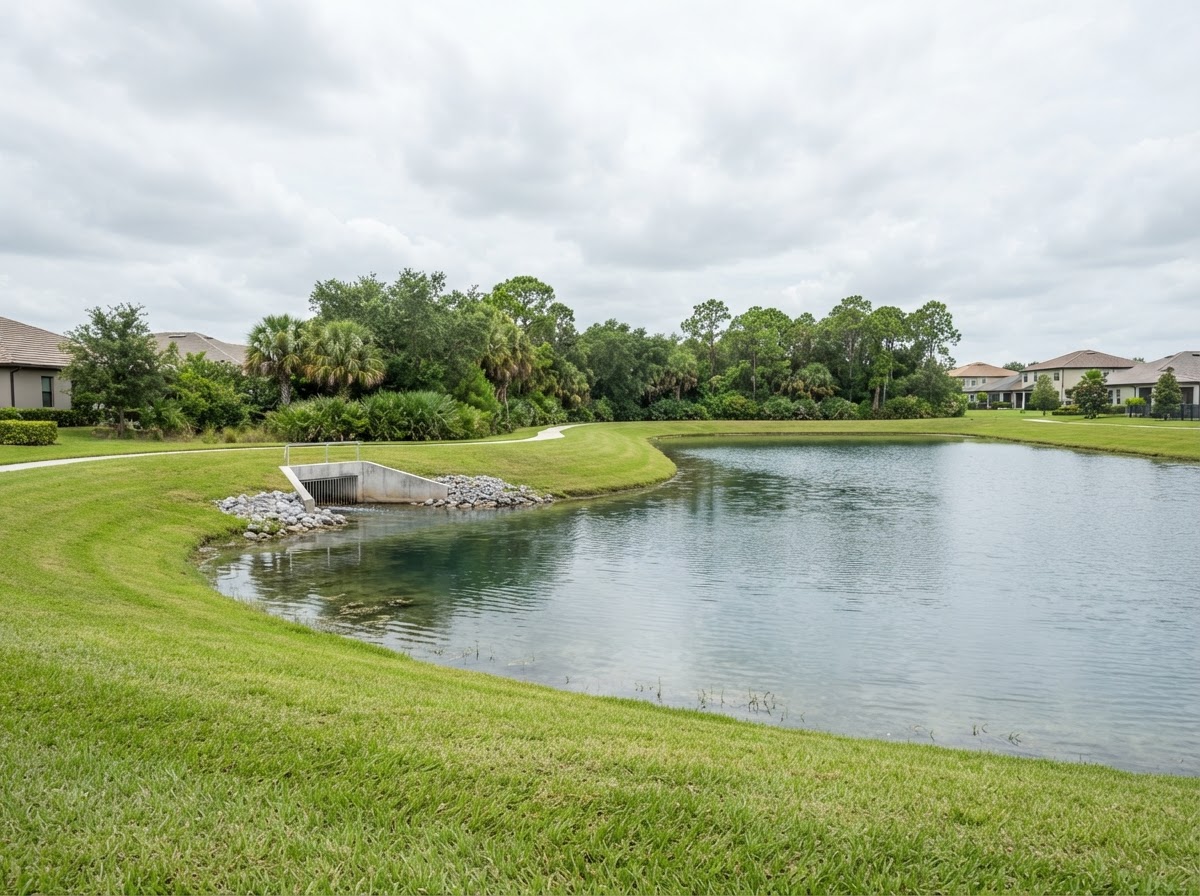
A retention pond is not a landscape feature — it is stormwater infrastructure. When vegetation, cattails, and debris fill the basin, the pond's holding capacity shrinks exactly when you need it most: during a heavy Florida downpour or tropical system. Clogged inlets and outflows back water up, and overgrown banks hide the condition of the structure underneath.
For HOAs and property managers, an overgrown retention pond is both a drainage risk and an aesthetic liability. Dense floating mats create mosquito breeding habitat, trapped organic material decays and smells, and the pond reads as neglected to residents and inspectors. Left long enough, vegetation can interfere with the control structures that regulate water level.
The infrastructure stakes are real. A retention basin is engineered to hold a specific volume of stormwater and release it at a controlled rate. When vegetation and muck displace that volume, or when a clogged outflow restricts release, the basin can overflow or back up into streets and yards during the exact storms it was built to handle. Regular clearing protects that engineered function, not just the pond's appearance.
Cattails are a particularly common retention pond problem. They spread through thick rhizome root systems that run along the bank and into the shallows, trapping sediment and muck inside the root mass and gradually filling the basin. A cattail stand that reaches an outflow or control structure can restrict flow and create exactly the backup the basin was designed to prevent. Our cattail removal addresses the roots, not just the visible tops.
Regular clearing keeps the basin functional and the neighborhood looking maintained, and it is far less disruptive than waiting for a backup or a compliance issue to force a major cleanup. A scheduled maintenance contract also gives property managers predictable budgeting and documentation, which is useful when basins are inspected or when boards ask what is being done.
Who This Service Is For
HOAs & community associations
Neighborhoods responsible for keeping shared retention basins functional and attractive.
Property managers & commercial sites
Teams managing retention ponds across one or many properties on a repeatable schedule.
Municipalities
Local partners supporting clean, managed public stormwater basins.
Developments & HOA boards
Boards balancing drainage performance with curb appeal and resident expectations.
Commercial developments
Sites where retention ponds are part of required stormwater infrastructure.
Our Approach & Methods
Mass vegetation harvesting
Heavy growth — cattails, hydrilla, duckweed, and mixed mats — is physically harvested and removed so the basin holds water instead of plants. This restores the holding volume the basin was engineered for.
Inlet & outflow clearing
We clear debris from inlets, culverts, and control structures so water moves through the basin as designed. This is the step that prevents the backups that cause flooding during heavy rain.
Bank & perimeter brush control
Overgrown banks are cleared so the pond edge reads clean and the structure underneath is visible and accessible for inspection. Bank clearing also reduces the mosquito habitat that dense brush creates.
Cattail root removal
Where cattails have encroached, we address the rhizome root system — not just the visible tops — so the stand does not immediately return and continue trapping muck in the basin.
Non-toxic, contract-ready maintenance
Chemical-free clearing on a repeatable schedule that fits property management budgets and reporting. No chemical runoff into the stormwater system the basin is part of.
Benefits, Limitations & Environmental Considerations
Retention pond cleaning helps the basin hold and drain water as intended, clears clogged structures, and makes the pond look maintained — all without chemicals, which matters because the basin is part of the stormwater system and chemical runoff is something most HOAs and municipalities want to avoid. The important distinction is between cleaning and engineering: we clear vegetation and debris, but we do not perform engineering inspections, structural repairs, drainage certification, or regulatory compliance services, and cleaning alone does not guarantee flood prevention or code compliance. Property owners remain responsible for meeting any county or jurisdictional requirements; we can tell you what we found during clearing so your engineer or inspector has accurate, current information. We will not overstate what cleaning accomplishes, but we will make sure the basin is clear, the structures are open, and you have notes you can hand to whoever handles compliance.
Our Project Process
From project review to a completed waterfront — clear steps, no instant-price promises, scope confirmed before any work begins.
Basin review
We assess the basin's vegetation density, inlet/outlet condition, bank growth, and access — often from photos for property managers juggling multiple sites.
Maintenance plan
We recommend a clearing and brush-control plan, and for HOAs and commercial accounts we can build a repeatable contract schedule.
Non-toxic clearing
We harvest the vegetation, clear structures and banks, and haul material away without chemical sprays.
Functional basin & reporting
You get a clean, functional basin plus notes on what we found so your engineer or compliance contact has current information.
Preparation, Access & What to Expect
Tell us about site access — gated communities, easements, equipment paths from the nearest road, and any slope or soft-bank concerns. Identify inlets, outflows, and control structures so we clear them without damaging hardware. For commercial and HOA accounts, a site map or contact for access helps us scope the visit accurately.
You do not need to treat the water. Our clearing is physical, so nothing is added to the basin beforehand. If the pond is under a current compliance or inspection cycle, share any known requirements so our notes are useful to the responsible party and so we know what structures to document.
For property managers handling multiple basins, a list of sites with addresses and any known problem areas lets us batch the review efficiently. We are used to working with property management schedules and can coordinate access across several properties.
What to Expect
- Expect a basin review covering vegetation density, inlet and outlet condition, bank growth, and access — often from photos for property managers juggling multiple sites.
- On the visit, expect physical vegetation harvesting, inlet and outflow clearing, and bank brush control — no chemical sprays introduced into the stormwater system.
- Expect the basin to hold and drain water more as designed once clogged structures are cleared and displaced volume is restored.
- Expect the pond to read cleaner and more maintained for residents, tenants, and inspectors who visit the property.
- Expect clear notes on what we found so your engineer or compliance contact has current, accurate information — cleaning is not itself an engineering inspection or certification.
- Expect a seasonal or contract maintenance schedule for HOAs and commercial accounts, with documentation that helps when basins are inspected or boards ask what is being done.
- Expect regrowth over the season; scheduled clearing keeps vegetation from re-establishing inside the control structures where it causes backups.
Maintenance & Regrowth Considerations
Retention ponds need scheduled clearing, not one-time cleanup. Seasonal or contract maintenance keeps vegetation from re-establishing in the structures and bank, preserves holding capacity going into storm season, and keeps the basin looking maintained for residents. Because we remove material physically, less accumulates between visits, so the routine gets easier over time.
A LakeMat is rarely the right tool for a full stormwater basin, but targeted mat placement in a persistent zone can be considered after clearing. We will be straightforward about whether your basin benefits rather than defaulting to it. The most valuable thing for a retention pond is a consistent schedule that clears growth before it affects the structures.
Cost Factors
Retention pond estimates depend on basin size, vegetation density, inlet/outlet condition, bank length, equipment access, and disposal volume — and for commercial and HOA accounts, whether you want a one-time clearing or a recurring contract. A single residential-adjacent basin is a very different scope from a large commercial basin with heavy cattail encroachment and a blocked outflow. We provide a free, transparent estimate tied to the actual scope. Contact us to request one, and for multi-site accounts we can discuss contract pricing.
Confirmed Coverage
We clean retention ponds across Orange, Seminole, and Osceola counties and surrounding Central Florida communities. Send the property address and we will confirm coverage. We work with HOAs, property managers, commercial sites, and municipalities.
Why Choose Project 7 Services
- Chemical-free clearing that keeps stormwater basins functional
- HOA and property-management-friendly contract scheduling
- Clears inlets, outflows, and banks — not just the surface
- Cattail root removal, not just topping the visible stalks
- Honest scope: cleaning, not engineering or certification
- Condition reporting that helps your compliance contact
Signs You May Need Retention Pond Cleaning
- The basin is visibly filling with vegetation, cattails, or floating mats
- An inlet or outflow is choked with debris and water is not moving through as designed
- The pond's banks are overgrown and hide the condition of the control structures
- After heavy rain, the basin backs up or overflows instead of draining on schedule
- Dense floating mats are creating mosquito breeding habitat that residents notice
- Trapped organic material is decaying and the basin smells
- Cattails have encroached on a drainage structure and are restricting flow
- The basin reads as neglected and is drawing complaints from residents or inspectors
- You manage multiple basins and need a repeatable, documented maintenance schedule
- An inspection or compliance cycle is approaching and the basin is not ready
Understanding the Differences
Retention pond cleaning vs. pond cleaning
Retention pond cleaning serves engineered stormwater basins where holding capacity and drainage function are the priority. Pond cleaning serves private, HOA, farm, and decorative ponds where appearance and enjoyment are the priority. The methods overlap, but a retention basin is infrastructure first and a landscape feature second.
Cleaning vs. engineering inspection or certification
Cleaning clears vegetation and debris and keeps the basin functional. It is not an engineering inspection, structural repair, drainage certification, or regulatory compliance service. Compliance is the property owner's responsibility; we clear the basin and report what we found so your engineer or inspector has accurate information.
One-time clearing vs. maintenance contract
A one-time clearing restores a neglected basin. A maintenance contract keeps it functional season to season with predictable budgeting and documentation, which is what most HOAs and property managers need. Because we remove material each visit, less accumulates between visits, so the routine gets easier over time.
Chemical clearing vs. non-toxic clearing
Chemical treatments kill vegetation but leave it to decompose in the basin and introduce chemical runoff into the stormwater system. Non-toxic physical clearing removes the material entirely and avoids chemical runoff, which matters because the basin is part of the stormwater system most HOAs and municipalities want kept chemical-free.
Ask About LakeMat®
After cleaning, LakeMat weed-control mats can help keep targeted shoreline, dock, and swimming areas clearer without chemicals.
Retention Pond Cleaning FAQs
Request a Free Estimate
Get a transparent quote for retention pond cleaning at your property.
Call (407) 865-1219Get a Free Estimate