
Cattail removal is the cutting and root-level extraction of dense cattail stands that have overgrown a pond edge, lake shoreline, or drainage swale. Project 7 Services manages cattail overgrowth across Orlando and Central Florida without chemical sprays — cutting stands, pulling rhizome roots, and hauling the material away so the water opens back up. Request a free estimate and we will review the stand density, shoreline access, and scope before confirming work.
What Cattail Removal Includes
- Thick cattail stand cutting and mowing
- Rhizome and root extraction at the bank
- Shoreline bank restoration after clearing
- Disposal and haul-away of cut material
- Targeted maintenance for regrowth control
- Drainage structure clearing where cattails encroach
- Muck removal trapped inside cattail beds
- Selective thinning for managed native stands
The Problem Cattail Removal Addresses
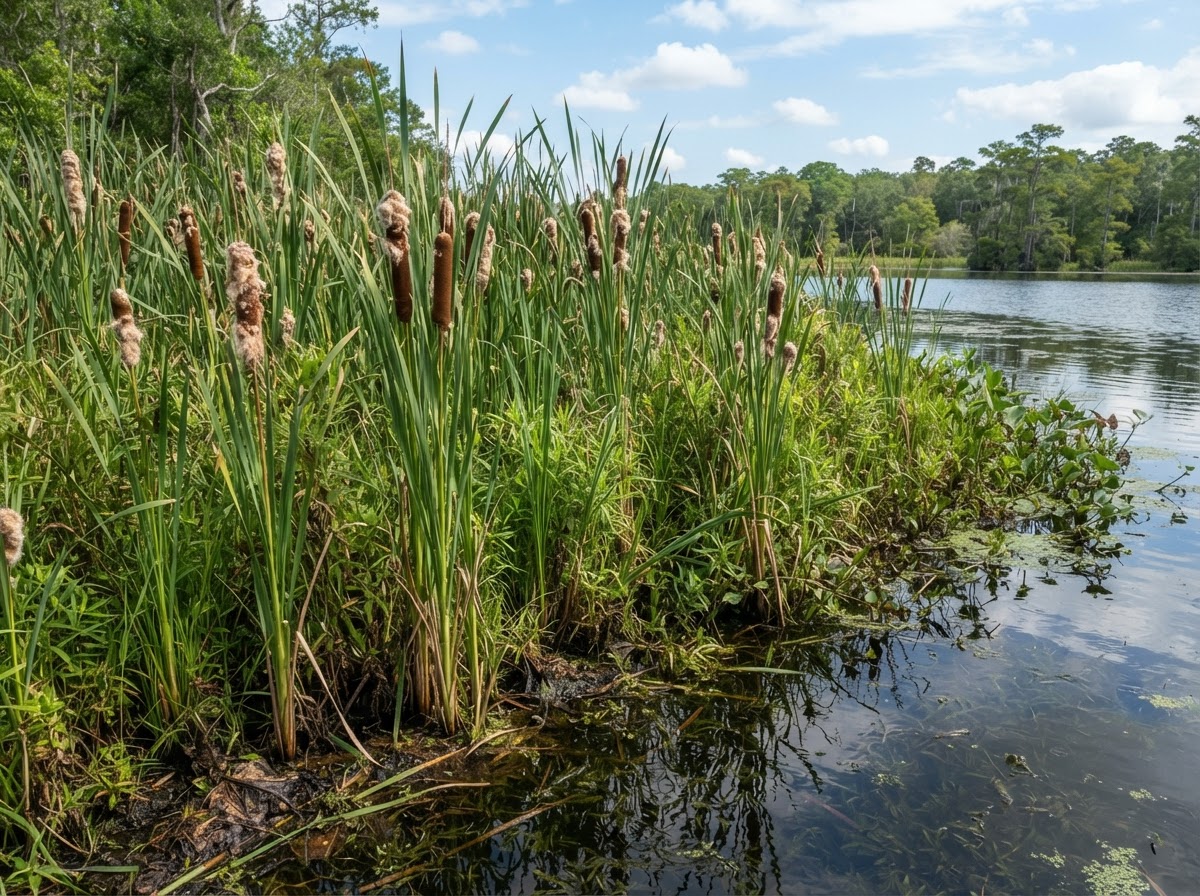
A few cattails at the water's edge look natural and even beneficial. A dense, spreading stand is a different problem. Cattails expand through thick rhizome root systems that run along the bank and into the shallows, so the visible stalks are only part of the plant. As the stand thickens it crowds out open water, traps sediment and muck inside the root mass, and blocks the shoreline view and access.
For ponds and retention basins, a cattail stand that reaches a drainage structure or outflow can restrict flow exactly when the basin needs to move water. The trapped muck inside the stand also creates the nutrient-rich conditions that fuel more growth, so the problem feeds itself. A stand that looks manageable in spring can dominate a pond edge by late summer.
The rhizome network is the key to why cattails are so persistent. The underground roots store energy and push up new stalks each season, so cutting the visible tops does almost nothing — the stand returns from the roots within weeks. Real removal has to address the rhizome system, pulling the root mass out so regrowth is slowed rather than immediate. This is the difference between mowing a cattail stand and actually removing it.
Cattails also trap muck. The dense root mass acts like a net, catching sediment, leaves, and organic debris that settle inside the stand and decompose. Over time the stand literally builds its own soil, raising the bank and filling in the water edge. Removing the stand and the trapped muck opens the water back up and stops that fill-in process, which is why cattail removal often changes a pond edge more dramatically than owners expect.
Because the roots persist even when the tops are cut, removal has to address the rhizomes — not just mow the visible stalks — or the stand returns quickly. And because Central Florida's climate favors regrowth, removal is best paired with a maintenance plan and, where appropriate, a LakeMat barrier in the most persistent zone.
Who This Service Is For
Pond & lake homeowners
Owners reopening a view and water access blocked by dense cattails.
HOAs & communities
Neighborhoods managing cattail overgrowth in shared ponds and retention basins.
Property managers
Teams keeping pond edges and drainage structures clear and functional.
Commercial & municipal sites
Properties where cattails threaten drainage flow or appearance.
Retention basin owners
Owners whose basin outflow is being encroached by cattail rhizomes.
Our Approach & Methods
Stand cutting & mowing
Dense visible stands are cut and mowed to open the shoreline and sightline before root work. This is the first step — it clears the top growth so we can reach and remove the rhizome network underneath.
Rhizome & root extraction
We pull the underground rhizome root system — not just the tops — so regrowth is slowed rather than immediate. This is what separates real removal from a temporary mow.
Trapped muck removal
The muck and sediment trapped inside the cattail root mass are removed with the stand, which opens the water edge and stops the fill-in process the stand was driving.
Bank restoration
After clearing, the bank is restored so the shoreline reads clean and the structure underneath is accessible, whether that is a drainage outflow or just the water edge.
Non-toxic, wildlife-safe approach
No chemical sprays; physical cutting and root work that is safe for shoreline wildlife and fish. The water is safe as soon as we finish, with no waiting period.
Benefits, Limitations & Environmental Considerations
Cattail removal reopens the water and the view immediately, and root-level extraction slows regrowth significantly compared to topping the stalks and leaving the rhizomes. Removing the trapped muck along with the stand often changes the pond edge more than owners expect, because the stand was literally filling in the water. Cattails do have ecological value in small numbers — they stabilize banks and provide habitat — so removal is about managing overgrowth, not eliminating the plant entirely, and decisions depend on site conditions. The limitation is that rhizomes can be extensive and Central Florida conditions favor regrowth, so maintenance is part of the solution. We do not promise permanent removal or universal permit exemptions. A stand that has been removed can return from remaining roots or seed, which is why a follow-up plan and, where it fits, a LakeMat barrier in the persistent zone are part of a complete approach.
Our Project Process
From project review to a completed waterfront — clear steps, no instant-price promises, scope confirmed before any work begins.
Stand review
We assess stand density, how far the rhizomes run, shoreline access, and whether the stand is affecting drainage structures.
Removal plan
We recommend cutting, root extraction, and bank restoration for your stand and confirm scope before starting.
Non-toxic removal
We cut the stand, pull the rhizomes, remove trapped muck, restore the bank, and haul material away without chemical sprays.
Open water & maintenance
You get a clearer shoreline and a maintenance plan to keep regrowth manageable.
Preparation, Access & What to Expect
Tell us about bank slope, soft edges, and whether the stand has reached an outflow or drainage structure we should clear around. Mark any native plants you want kept; removal is selective where it can be. No chemical treatment is needed beforehand — our work is physical.
For HOA or shared ponds, a single access contact helps us coordinate. If the stand is in a retention basin under inspection, share what you know so our notes are useful to the responsible party and so we know what structures to document.
If the stand has been cut before without root removal, let us know. A stand that has been repeatedly mowed often has a dense, established rhizome network that takes more work to extract, and that context helps us scope the visit accurately.
What to Expect
- Expect a stand review covering density, how far the rhizomes run, shoreline access, and whether any drainage structures are affected before scope is confirmed.
- On the visit, expect stand cutting followed by rhizome root extraction — not just mowing the visible tops — plus trapped-muck removal and bank restoration.
- Expect the water edge and your view to reopen visibly, often more dramatically than owners anticipate because the stand was literally filling in the bank with its own soil.
- Expect the water to be safe for shoreline wildlife and fish immediately after we finish, with no chemical residue and no waiting period.
- Expect some regrowth from remaining roots or seed; rhizome networks can be extensive, so a maintenance plan catches any return before it re-establishes and traps fresh muck.
- Expect a LakeMat suggestion only for a persistent zone where it genuinely fits — not by default.
- Expect honest guidance that cattails have ecological value in small numbers and that removal is about managing overgrowth, not eliminating the plant entirely.
Maintenance & Regrowth Considerations
Rhizomes can regrow, so a maintenance plan — seasonal or as-needed — keeps the stand from re-establishing and trapping fresh muck. Because we remove material physically, less decays on the bank between visits, which also reduces the nutrients that feed regrowth. Over several cycles, a managed pond edge tends to stay clearer longer.
For a persistent cattail zone, a LakeMat can suppress bottom-rooted regrowth after the stand is cleared. We will tell you honestly whether your bank is a fit for a mat rather than recommending one by default. The most effective approach is root-level removal followed by a maintenance schedule that catches any return before it re-establishes.
Cost Factors
Cattail removal estimates depend on stand size and density, how far the rhizomes run, shoreline access, whether drainage structures are involved, and disposal volume. A small residential pond edge with a light stand is a very different scope from a large retention basin with dense, established cattails encroaching on an outflow. We give a free, transparent estimate after reviewing the stand — never a guessed price. Contact us to request one, and we will walk through what is driving the scope.
Confirmed Coverage
We remove cattails across Orange, Seminole, and Osceola counties and nearby Central Florida communities. Send your location and we will confirm coverage.
Why Choose Project 7 Services
- Root-level extraction, not just topping the stalks
- Non-toxic and safe for shoreline wildlife
- Reopens water access and sightlines quickly
- Removes trapped muck that was filling in the edge
- Honest about regrowth and maintenance needs
- Clears drainage structures cattails have encroached
Signs You May Need Cattail Removal
- A dense stand of cattails has overtaken your pond edge, lake shoreline, or drainage swale
- The stand is crowding out open water and shrinking the usable shoreline
- You cut the cattails before and they came back within weeks from the roots
- Muck and sediment are visibly trapped inside the cattail root mass
- The stand has reached a drainage outflow or control structure and is restricting flow
- The cattails block your view of the water from the house or patio
- The shoreline is filling in where the cattail stand is building its own soil
- A few cattails have spread into a thick, monoculture stand over one or two seasons
- The stand is drawing complaints from residents or tenants about the neglected pond edge
- You want the water edge back but are not sure whether to remove all the cattails
Understanding the Differences
Cattail removal vs. aquatic weed removal
Cattail removal specifically targets dense cattail stands and their rhizome root systems. Aquatic weed removal is broader, covering submerged and floating species like hydrilla, hyacinth, and duckweed. If cattails are the dominant problem, cattail removal is the focused service; if the water is choked with multiple weed types, aquatic weed removal covers it.
Root-level removal vs. cutting the tops
Cutting the visible cattail tops does almost nothing — the underground rhizome roots store energy and push up new stalks within weeks. Root-level extraction pulls the rhizome system so regrowth is significantly slowed. This is the difference between a temporary mow and real removal.
Cattail removal vs. selective thinning
Cattails have ecological value in small numbers — they stabilize banks and provide habitat. Full removal is for stands that have overgrown and are causing problems. Selective thinning is for owners who want to keep some cattails but manage the spread. The choice depends on your site, and our clearing is selective where it can be.
Removal vs. chemical treatment
Chemical treatments kill cattails but leave them to decompose in the water and often do not fully kill the rhizome network, so the stand returns. Physical root-level extraction removes the plant and the root mass, along with the trapped muck, without chemical residue — but regrowth is still possible, so maintenance is part of the approach.
Ask About LakeMat®
After cleaning, LakeMat weed-control mats can help keep targeted shoreline, dock, and swimming areas clearer without chemicals.
Cattail Removal FAQs
Request a Free Estimate
Get a transparent quote for cattail removal at your property.
Call (407) 865-1219Get a Free Estimate